


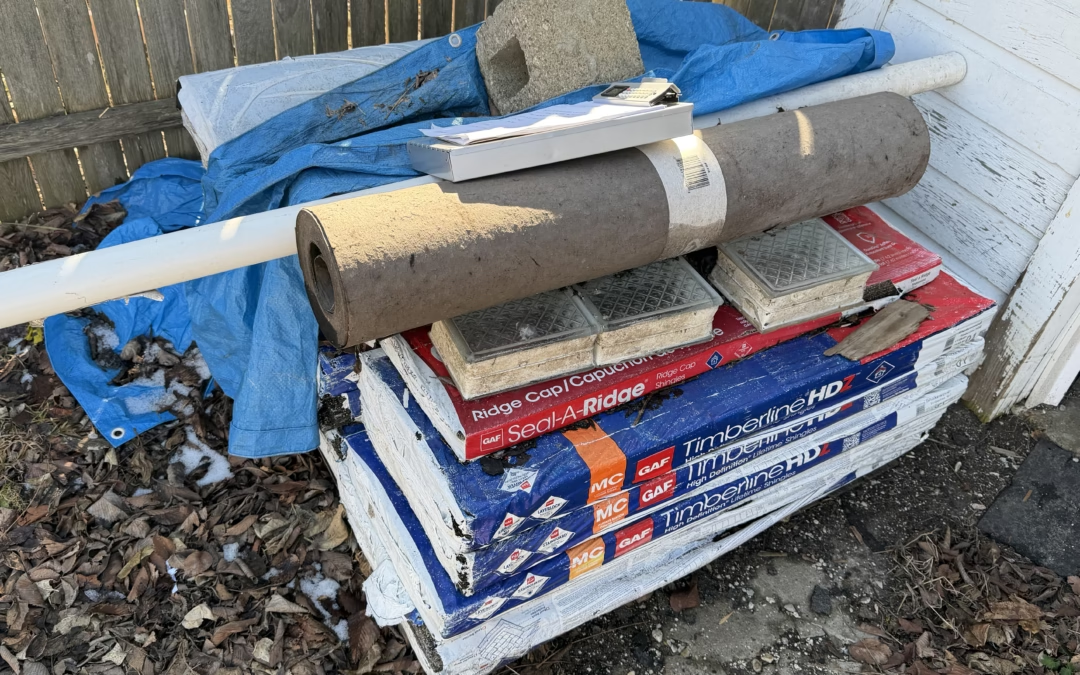
Can You Hire a Roof Labor Only and Buy Materials Yourself?
One of the most common questions homeowners ask when planning a roof replacement is simple on the surface but more complex in reality:
Can I hire a roofer for labor only and buy the materials myself?
The honest answer is yes, most of the time you can. But it depends on the contractor, and there are several important factors that homeowners need to understand before choosing this route.
While it may seem like a way to save money or stay in control of your project, hiring a roofer for labor only shifts a significant amount of responsibility onto you as the homeowner. If you are not fully prepared, it can actually lead to delays, added costs, and frustration.
This guide breaks down everything you need to know so you can make the right decision for your home.
Why Homeowners Consider Labor Only Roofing
There are a few common reasons homeowners explore this option.
First, many believe they can save money by purchasing materials themselves. They may think they can find better pricing online, through a friend in the industry, or at a local supplier.
Second, some homeowners want more control over product selection. They may have a specific brand or color in mind and want to make sure they are getting exactly what they want.
Third, there is a perception that separating labor and materials creates more transparency in pricing.
While all of these reasons make sense, they do not always play out the way homeowners expect once the project begins.
The Reality: It Depends on the Contractor
Not every roofing contractor is willing to take on labor only jobs.
Some companies are open to it, especially smaller crews or independent contractors. Others will decline the work entirely.
There is no universal rule here. Each contractor runs their business differently and has their own policies based on experience.
If a contractor says no, it is usually not because they are trying to be difficult. It is because they have likely run into issues with labor only jobs in the past and want to avoid those same problems again.
The Biggest Tradeoff: Manufacturer Warranties
One of the most important things homeowners need to understand is how this decision impacts warranties.
When a contractor provides both labor and materials, they can often offer:
- Manufacturer-backed warranties
- Extended system warranties
- Workmanship warranties tied to certified installation
When you supply the materials yourself, that changes.
In most cases, the contractor cannot activate a full manufacturer warranty. Many manufacturers require:
- Certified installers
- Complete roofing systems
- Materials purchased through approved distribution channels
If those requirements are not met, you may only receive a basic product warranty, or in some cases, no meaningful coverage at all.
That means if there is a failure related to materials or installation compatibility, you may not have the protection you expect.
For many homeowners, this alone is a major reason to reconsider labor only roofing.
You Are Responsible for the Entire Material List
Roofing is not just shingles. This is one of the biggest misunderstandings homeowners have.
A complete roofing system includes multiple components that all work together. If you are supplying materials, you are responsible for making sure nothing is missing.
This includes:
- Shingles
- Starter shingles
- Hip and ridge cap shingles
- Underlayment
- Ice and water shield
- Proper ventilation such as ridge vents and intake vents
- Drip edge
- Flashing materials such as step flashing and pipe boots
- Fasteners and accessories
- The correct waste factor
If even one item is missing, it can stop the job.
This is why it is critical to listen to your contractor’s recommendations. Even if you are buying the materials, they are the ones installing the system and understand what is required for it to perform correctly.
Trying to cut corners or skip components to save money often leads to bigger problems later.
Understanding Waste Factor and Ordering Accuracy
One of the easiest ways for a labor only project to go sideways is incorrect material quantities.
Roofing materials are not ordered exactly to the square footage of your roof. Contractors include a waste factor, which accounts for cuts, angles, and material lost during installation.
If you underorder materials:
- The crew may have to stop mid-project
- You may need to rush to order more
- Pricing may be different for smaller follow-up orders
- The project timeline can be disrupted
If you overorder materials:
- You may be stuck with excess product
- Returns may not be accepted or may include restocking fees
Experienced contractors know how to estimate accurately. When you take on that responsibility, the margin for error increases.
Why Contractors Often Decline Labor Only Jobs
Many roofing contractors choose not to offer labor only services, and the reasons are practical.
Unclear Responsibility for Shortages
If materials run short, it raises immediate questions:
- Does the crew stop working?
- Is the homeowner expected to get more materials right away?
- Does the contractor leave and come back another day?
These situations create inefficiency and can impact the contractor’s schedule for other jobs.
Who Handles Additional Costs?
If more materials are needed, someone has to pay for them.
Questions that come up include:
- Who is responsible for the added cost?
- What happens if prices have increased?
- What if the wrong product was ordered?
Without clear agreements, this can quickly turn into a disagreement.
Material Quality and Compatibility Concerns
Contractors typically work with trusted suppliers and known products.
When homeowners purchase materials themselves, there is a risk of:
- Mixing incompatible components
- Choosing lower quality products
- Ordering incorrect items
Even small mistakes can affect the performance of the entire roofing system.
Delivery and Jobsite Logistics
Material delivery is one of the most overlooked parts of a roofing project.
Important questions include:
- Who is scheduling the delivery?
- Will the materials be delivered on the roof or on the ground?
- Is the contractor expected to move materials manually?
If materials are not delivered properly, it can slow down the crew and increase labor demands.
Roofing crews are scheduled tightly. Delays caused by delivery issues can throw off multiple projects.
The Importance of Following Contractor Guidance
If you decide to move forward with a labor only roofing project, the most important thing you can do is work closely with your contractor.
Even though you are purchasing the materials, you should:
- Have the contractor provide a full material list
- Confirm quantities and waste factor
- Get recommendations on brands and products
- Coordinate delivery timing and placement
Ignoring professional advice to save a few dollars often leads to bigger costs later.
A good contractor wants the job to go smoothly just as much as you do. Their input is critical to making that happen.
Setting Clear Expectations Before the Job Starts
Communication is everything in a labor only roofing project.
Before work begins, both you and the contractor should have clear answers to:
- Who is responsible for ordering materials
- Who handles shortages or mistakes
- Who pays for additional materials if needed
- How delivery will be handled
- What happens if delays occur
- What type of warranty, if any, is provided
Putting these details in writing can prevent confusion and protect both sides.
When Labor Only Roofing Might Make Sense
There are situations where this approach can work well.
For example:
- You have experience with construction or material sourcing
- You have a strong relationship with a trusted contractor
- You are working on a smaller or less complex roofing project
- You fully understand the risks and responsibilities
In these cases, labor only roofing can be a viable option.
When It Might Not Be the Best Choice
For many homeowners, hiring a contractor to provide both labor and materials is the better route.
This is especially true if:
- You want full warranty coverage
- You do not have experience ordering roofing materials
- You want a streamlined, hassle-free process
- You want a single point of responsibility for the entire project
In these situations, the added convenience and protection often outweigh any potential savings.
Final Thoughts – Roof Labor Only
So, can you hire a roofer for labor only and buy the materials yourself?
Yes, most of the time you can. But it depends on the contractor, and it comes with added responsibility.
You need to be prepared to:
- Purchase every required component of the roofing system
- Order accurate quantities with proper waste factor
- Coordinate delivery and logistics
- Accept limitations on manufacturer warranties
- Handle any issues related to shortages or additional costs
It is also important to understand why some contractors may say no. Labor only jobs introduce variables that can make projects more difficult to manage.
If you choose to move forward with this approach, the key to success is simple:
Listen to your contractor, plan ahead, and communicate clearly.
Doing that will give you the best chance at a smooth project and a roof that performs the way it should for years to come.
Get in touch with us here if you have any further questions.