


Siding in Sterling Heights: How We Kicked Off the Season with a Clay D4 Mastic Plygem Transformation
Spring finally showed up, and we were ready. After a long Michigan winter of planning, quoting, and waiting for temperatures to cooperate, we loaded up the truck and headed out to Sterling Heights for our first full siding project of the year. There is something about that first job after the weather breaks that just feels good. The crew is sharp, the energy is high, and everyone is ready to get back to work doing what we do best.
This project turned out to be a great one to open the season with. The house is a classic Sterling Heights ranch from what looks like the late 1990s or early 2000s, and it came with one of the most common looks you find in this pocket of Macomb County: the old faux Tudor style. If you have driven through the subdivisions off of Mound Road or out near 18 Mile, you know exactly what we are talking about. Those decorative half-timber boards, the dark stained trim lines, the heavy and dated appearance that made sense in its era but now looks like every other house on the block. The homeowners had lived with it long enough. They were ready for a clean, updated look that would hold up for decades to come.
The Problem with Faux Tudor Siding
The faux Tudor aesthetic was everywhere in metro Detroit during the 1990s. Builders leaned into it hard, and the result is entire neighborhoods full of homes with that same dark, heavy exterior character. The decorative trim boards that create the Tudor effect are usually some of the first things to show serious wear. They trap moisture, they peel, they rot, and they become a maintenance headache year after year.
On this house, the original siding underneath the Tudor treatment was aging out. The trim boards were soft in spots, the caulk lines had long since failed, and the overall look had gone from dated to genuinely tired. The homeowner told us they had been patching and painting for a few seasons and finally decided it made more sense to do the job right.
That is the conversation we have with a lot of homeowners when they call us about siding in Sterling Heights. There is a point where continued maintenance costs more in time, money, and stress than a full replacement would. When you factor in the energy efficiency gains and the curb appeal boost, a new installation almost always pencils out better than another round of repairs.

Why Mastic Plygem
When it came time to choose a product, we recommended Mastic Plygem, and the homeowners were on board quickly once we walked them through it. Mastic has been a trusted name in vinyl siding for a long time, and their products hold up especially well in climates like ours where you are dealing with brutal cold, heavy snow loads, freeze-thaw cycles, and then full summer heat and humidity all within the same calendar year.
Mastic Plygem siding is engineered with a thick, rigid profile that resists warping and buckling. It holds color well because the pigment goes all the way through the material rather than sitting on the surface, which matters a lot when you are looking at 20 or 30 years of UV exposure. The warranty coverage is strong, and it is a product we stand behind without hesitation.
For this project, the homeowners chose the D4 profile in Clay. The D4 profile gives you that traditional Dutch lap look with a clean four-inch exposure, which works beautifully on a house this size and style. Clay is one of those colors that photographs warm and neutral, reads well against a wide range of trim colors, and does not show the kind of weathering and oxidation that darker colors can develop over time.
The Musket Brown Trim Decision
Pairing the Clay siding with Musket Brown trim was the right call, and honestly it was not a hard decision once we pulled the samples. Musket Brown is a rich, earthy tone that gives you real depth and contrast against the lighter Clay body. It grounds the house visually and gives it that sense of definition that the old faux Tudor look was actually trying to achieve, just in a much cleaner and more modern way.
The trim package covered the corners, the window surrounds, the fascia, the soffit, and the gable returns. Getting the trim details right is where a siding job either looks truly finished or starts to look cut-rate. We take our time on trim because that is where the craftsmanship shows up most clearly from the street.
The combination of Clay body panels and Musket Brown trim is one we have used on several projects in Macomb County over the past few years, and the results have been consistently strong. It tends to read as timeless rather than trendy, which is exactly what most homeowners are after when they are making a 30-year investment in their exterior.

What the Installation Looked Like
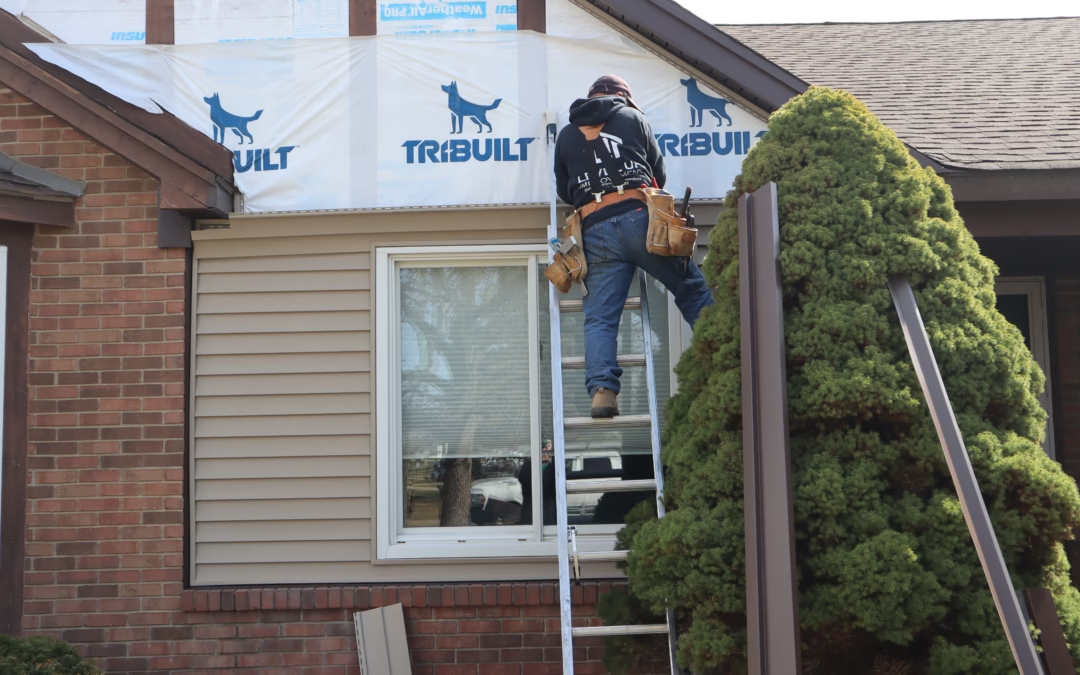
We started with a full teardown of the old Tudor trim boards. Some of that material had to be handled carefully because it was soft enough in places that we needed to assess the sheathing underneath before we moved forward. Fortunately, the walls were in good shape. We made a few spot repairs, installed new housewrap where needed, and built ourselves a solid, dry foundation to work from.
From there it was a full wrap with Mastic Plygem Clay D4 panels from the foundation line up. The crew worked methodically across each elevation, keeping courses level and seams staggered properly. On a house with the geometry of a ranch, you have a few tricky spots to navigate. Nothing our team has not dealt with a hundred times, but it is the kind of detail work that separates a quality installation from one that just looks okay from 50 feet away.
The Musket Brown trim went on last, and that is where the whole project came together visually. Every window got a full surround treatment. The corners are clean and sharp. The fascia and soffit work ties everything back to the main body of the house in a way that feels intentional and finished.

Sterling Heights Siding: What Homeowners Should Know
If you live in Sterling Heights and you are starting to think about new siding, there are a few things worth knowing going into the process.
First, the age of housing stock in this area means a lot of homes are running on original or near-original siding from the 1970s through the 2000s. That material is not getting any younger, and deferred maintenance tends to compound. The sooner you address failing exterior systems, the less likely you are to find larger problems underneath when you do eventually pull the trigger.
Second, product selection matters in Michigan. Not every vinyl siding product is built to handle the thermal range we deal with here. Products that perform fine in moderate climates can buckle, gap, or fade prematurely when exposed to genuine Midwest winters and summers. Mastic Plygem is a product we trust here specifically because it is engineered for this kind of performance demand.
Third, workmanship is the variable that most homeowners underestimate. The same panel installed by two different crews can produce very different results. Proper starting strips, correctly sized nailing slots, maintained expansion gaps, and precise trim integration are all things that separate a 30-year installation from one that starts showing problems in year five.
A Strong Start to the Season
This project set a great tone for the year. The homeowners were thrilled with how the house turned out, and honestly, it is the kind of transformation that is hard not to feel good about. A house that looked heavy and dated for years now looks clean, sharp, and well-maintained. The Clay and Musket Brown palette gives it a character that fits the neighborhood without blending into the background.
If you are thinking about siding in Sterling Heights or anywhere in Macomb County, we would love to talk through your project. Give us a call or fill out a contact form on our site and we will get you scheduled for a free estimate.