


Hail Damage Roof Inspection: What Metro Detroit Homeowners Should Know After a Storm
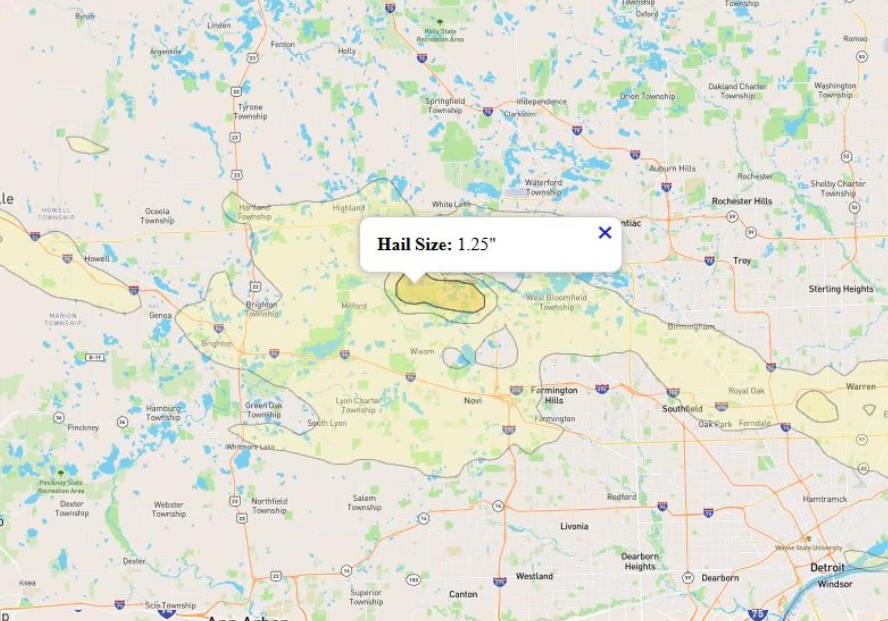
After last night’s storms, homeowners across Metro Detroit may start seeing roofing companies knocking on their doors. If you think your home took a hit, a hail damage roof inspection can help you understand what actually happened.
The important word there is actually.
Despite what some door-knocking roofing companies may tell you, we don’t get major hail storms every week in Southeast Michigan. We do get them occasionally. When a legitimate hail storm comes through, it can damage roofing, siding, gutters, and other parts of a home’s exterior.
That doesn’t mean every house in the neighborhood suddenly needs a new roof.
Here’s what homeowners should know before requesting estimates, filing an insurance claim, or signing a contract.
Start With a Hail Damage Roof Inspection
You don’t need to climb onto your roof after a storm.
Start by walking around your property. Look for obvious signs of damage from the ground.
Check your siding, gutters, downspouts, window screens, metal vents, and other exterior surfaces. Hail may leave dents, cracks, chips, or impact marks.
Your roofer should perform a much more detailed inspection.
On an asphalt shingle roof, we’re looking for legitimate hail impacts. That can include displaced granules and damage to the shingle mat. We’ll also inspect soft metals, vents, flashing, gutters, and other areas that can help tell the story of what happened.
Wind damage matters too. Lifted, creased, or missing shingles may indicate that wind affected the roof even when hail damage is limited.
Most importantly, your contractor should document what they find with photos.
Don’t Let Someone Manufacture a Roof Claim
A contractor shouldn’t decide that you have an insurance claim before inspecting your home.
We’ve seen the sales pitch before.
“There was hail in your neighborhood, so your insurance company owes you a roof.”
It doesn’t work that way.
Storm damage needs to exist, and your policy needs to cover that damage.
If we inspect your roof and don’t see enough storm damage to justify a claim, we’ll tell you. Filing unnecessary claims doesn’t benefit the homeowner.
If there is legitimate damage, we’ll explain what we found and discuss the next steps.
Be Careful With Storm Chasers
Large storms attract contractors from everywhere.
Some may come from another state. Others may technically be Michigan companies but operate from the other side of the state.
That doesn’t automatically make them bad contractors. However, you should ask yourself one important question:
Where will they be when you need them two years from now?
A contractor can offer an incredible warranty on paper. That warranty isn’t worth much if the company disappears once the storm work dries up.
Look for an established local company with a real presence in your area. Check its license, insurance, reviews, address, and history.
Don’t let anyone pressure you into signing something on your porch, even a contingency agreement.
And remember: if it sounds too good to be true, it probably is.
What Is a Roofing Contingency Agreement?
After a storm, a roofing contractor may ask you to sign a contingency agreement. Homeowners should understand exactly what they are signing before agreeing to anything.
A contingency agreement generally says that if your insurance company approves covered work, you agree to use that contractor to complete the project. In other words, the contractor may inspect the property, document the damage, meet with the insurance adjuster, and help prepare the scope of work with the understanding that they will perform the repairs if the claim is approved.
A contingency agreement is not the same thing as your insurance company approving a claim, and signing one does not guarantee that insurance will pay for a new roof or siding.
Before signing, read the entire agreement. Ask whether you can cancel, whether there are cancellation fees, what happens if the insurance company only approves part of the work, and what obligations you have if you decide to use another contractor.
Be especially cautious if someone tells you that signing is “just permission to inspect the roof.” If the document actually commits you to hiring that company, you need to know that before you sign it.
At Level Up Improvement, we believe homeowners should understand what they’re agreeing to. Don’t sign paperwork because someone standing at your door tells you that you need to act immediately.
How a Hail Damage Insurance Claim Works
If an inspection finds legitimate storm damage, the homeowner typically starts the claim.
Call your insurance company or agent and report when the storm occurred and what damage you found. Your insurer will assign a claim number and usually send an adjuster to inspect the property.
Your roofing contractor can often meet the adjuster at your home.
We like to be there when possible. It allows us to show the adjuster what we documented and discuss damaged areas together.
The insurance company then determines what damage the policy covers.
An important point for homeowners is that your contractor does not determine coverage. Your insurance company does.
What Will You Have to Pay?
Your deductible is generally your responsibility.
For example, imagine the insurance company approves $20,000 of covered repairs and your deductible is $2,000. You should expect to be responsible for that $2,000 deductible, subject to the terms of your policy and claim.
Be very cautious when someone promises to “eat,” “waive,” or otherwise make your deductible disappear.
Your contractor should clearly explain the project price and paperwork. Your insurance company can explain exactly how your deductible and coverage apply to the claim.
ACV vs. RCV Roofing Coverage
This is one of the most important parts of your policy to understand.
ACV stands for Actual Cash Value.
An ACV policy accounts for depreciation. The age and condition of your roof can reduce the amount the insurance company pays.
RCV stands for Replacement Cost Value.
With replacement cost coverage, a claim may involve multiple payments.
The insurer may initially pay the actual cash value of the damaged property, minus your deductible. The company holds back depreciation. After you complete the covered work and submit the required documentation, the insurer may release recoverable depreciation according to your policy.
Every policy is different. Read your policy and ask your insurance agent or carrier to explain your specific coverage.
Don’t rely on a roofer to tell you what your insurance policy guarantees.
What Is an Insurance Supplement?
The word “supplement” sometimes makes homeowners nervous, but supplements are a normal part of many insurance restoration projects.
An insurance adjuster’s original estimate may not include everything required to complete the approved repair.
For example, the estimate might miss a roofing component, siding accessory, code-required item, or additional quantity discovered during the project.
That’s where the supplement process comes in.
The contractor documents the additional item and submits supporting information to the insurance company. The insurer reviews it and decides whether the policy and claim cover that additional cost.
A supplement isn’t a blank check.
It also isn’t your contractor secretly increasing the bill.
A legitimate supplement documents necessary work that wasn’t included in the original insurance scope. The insurance company still decides whether to approve it.
Get Roofing and Siding Estimates From Local Contractors
After a hail storm, homeowners often feel like they need to make a decision immediately.
Usually, you don’t. It is okay to have one company put up a tarp and decide to use another company to do the actual work. Tarping is a common in an emergency situation, some companies will say something along the lines of “We will install a tarp for free if you sign this contingency agreement”. In my experience an insurance company will pay for the emergency tarp job anyway, dont make rushed decisions with who you actually choose as your contractor.
Take the time to get a professional inspection. Ask questions. Get written estimates when appropriate. Check licenses and insurance.
You can learn more about our roofing services and siding services before scheduling an inspection.
Michigan also provides resources that homeowners can use to verify contractor licensing and research a company before signing a contract.
Why Hiring a Local Contractor Matters
A storm restoration project doesn’t end when the last shingle gets nailed down.
What happens if you notice an issue next spring?
What if a piece of siding needs attention?
What if you have a warranty question?
That’s where hiring a local contractor becomes important.
Level Up Improvement works throughout Metro Detroit. We live and work in the same communities as our customers. We’re not following hail storms around the country looking for the next neighborhood to knock.
That accountability matters.
A local contractor also understands Michigan homes, local building departments, permit requirements, weather, and the products commonly used in our area.
Don’t Rush Into a Hail Damage Roof Claim
If last night’s storm came through your neighborhood, take a look around your property.
If you see something concerning, schedule a hail damage roof inspection before assuming you need to file a claim.
You want someone to tell you what they actually see, not what they need to say to sell you a roof.
If there’s legitimate storm damage, Level Up Improvement can document it and help you understand the repair process. If your roof looks fine, we’ll tell you that too.
We’re a local, family-owned roofing, siding, and window company serving Metro Detroit.
No high-pressure sales pitch. No disappearing after storm season. Just a straightforward assessment of your home and what it needs.
Do it right!
For another resource about hail inspections check out Reddit