


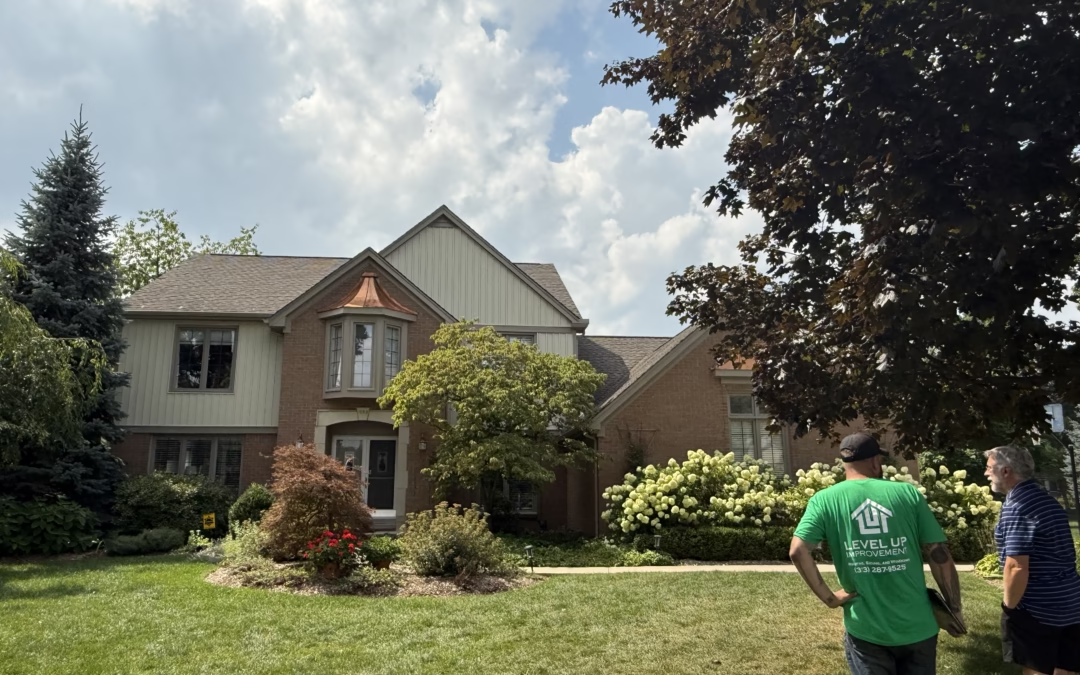
Michigan winter roof preparation should be on every homeowner’s fall checklist. Between heavy snow, freezing temperatures, ice dams, and repeated freeze-thaw cycles, our roofs take a beating during the winter months.
Here in Metro Detroit, we’ve seen how quickly a small roofing problem can turn into something much bigger once temperatures drop.
The good news? A little preparation now can help prevent expensive repairs later.
At Level Up Improvement, we help homeowners throughout Oakland County and Metro Detroit maintain, repair, and replace their roofs. Here are our recommendations for getting your roof ready for winter 2026–2027.
1. Inspect Your Roof Before the First Snowfall
One of the easiest ways to prepare your roof for winter is to look for obvious signs of damage while the weather is still decent.
You don’t need to climb onto your roof. In fact, we recommend staying on the ground.
Walk around your property and look for:
- Missing, cracked, or lifted shingles
- Shingles that appear curled or damaged
- Exposed nail heads or damaged flashing
- Loose or damaged gutters
- Tree branches touching the roof
- Debris collecting in roof valleys
Pay special attention to areas where different roof sections meet.
Chimneys, skylights, plumbing vents, and roof-to-wall intersections are also common trouble spots.
A small opening around flashing might not cause an obvious leak during a light rain. But snow and ice can create different conditions.
If something doesn’t look right, it’s worth having a professional take a closer look before winter arrives.
Does Every Older Roof Need to Be Replaced?
Absolutely not.
Age matters, but it’s only one factor.
We’ve inspected plenty of roofs that still have useful life remaining. Sometimes a repair is all that’s necessary.
Our guide to roof repair vs. replacement in Michigan explains how we help homeowners make that decision.
We’d rather tell you that your roof has a few more years left than recommend a replacement you don’t need.
2. Clean Your Gutters and Downspouts
This is one of the most important fall maintenance tasks for Michigan homeowners.
Leaves, twigs, and other debris can collect inside your gutters throughout autumn.
When gutters become clogged, water can’t drain properly.
As temperatures fall, trapped water can freeze and create additional problems.
Heavy ice can place stress on gutters and their attachments. Poor drainage can also direct water toward your foundation.
Before winter, make sure:
- Gutters are free of leaves and debris.
- Downspouts aren’t clogged.
- Water drains away from the foundation.
- Gutters are securely attached to the house.
- Connections and seams aren’t leaking.
If you have large trees around your home, you may need another cleaning after the last leaves fall.
One important distinction: Clean gutters help with drainage, but they don’t automatically prevent ice dams. Ice dams are more closely related to heat escaping into the attic, snow conditions, insulation, and ventilation.
If your gutters are difficult to reach, hire someone with the proper equipment rather than climbing a ladder yourself.
3. Check Your Attic Insulation and Ventilation
This is something we talk about regularly at Level Up Improvement.
A roof isn’t just shingles.
Your attic insulation, ventilation, and air sealing all play important roles in how your home handles Michigan winters.
When heated air escapes from the living space into the attic, it can warm the underside of the roof.
That warmth may melt snow higher up on the roof, even when the outside temperature is below freezing.
As the water travels toward colder roof edges, it can refreeze.
That’s one of the ways ice dams form.

Why Intake and Exhaust Ventilation Matter
A properly designed attic ventilation system generally needs both intake and exhaust.
Intake vents allow outside air to enter near the bottom of the attic.
Exhaust vents allow air to leave near the upper portion of the roof.
We like to explain it this way:
You can’t breathe out if you can’t breathe in.
If a home has exhaust ventilation but inadequate intake, the system may not work as intended.
However, ventilation alone won’t solve every attic moisture or ice dam problem. Air sealing and insulation are equally important.
We recently published a detailed guide explaining how to calculate attic ventilation.
If you’re unsure whether your attic has enough ventilation, it’s worth having it evaluated.
What About Attic Insulation?
The U.S. Department of Energy recommends insulation levels based on climate and existing conditions.
Michigan is a cold-climate state, so adequate attic insulation can make a noticeable difference.
Before adding more insulation, it’s important to address air leaks and avoid blocking soffit vents.
You can learn more from the Department of Energy’s insulation guidance.
4. Prevent Ice Dams Before They Become a Problem
Ice dams are one of the most frustrating winter roofing problems for Michigan homeowners.
They usually form when snow melts on a warmer section of the roof and refreezes near the colder eaves.
As ice builds up, it can prevent additional meltwater from draining.
That water may eventually work its way beneath shingles and into the home.
Common warning signs include:
- Thick ridges of ice along roof edges
- Large icicles forming repeatedly in the same areas
- Water stains on ceilings or exterior walls
- Moisture near attic insulation or roof decking
- Ice buildup in valleys and along gutters
Not every icicle means you have an ice dam.
But repeated heavy ice buildup is worth investigating.
How Do You Prevent Ice Dams?
The most effective long-term approach usually involves controlling heat loss into the attic.
That means looking at air sealing, insulation, and ventilation together.
Ice-and-water shield installed beneath the shingles can provide additional protection in vulnerable areas. It is not a substitute for correcting the conditions that cause ice dams.
Avoid chopping ice off your roof with tools or attempting to melt it with open flames.
Those methods can damage roofing materials and create serious safety risks.
The University of Minnesota Extension’s ice dam guide offers additional information about causes and prevention.
5. Trim Overhanging Tree Branches
Fall is a good time to inspect the trees around your home.
Branches that seem harmless during summer can become a problem when covered with heavy snow or ice.
A broken limb can damage shingles, gutters, flashing, or even roof decking.
Look for branches that:
- Touch or scrape against the roof
- Hang directly above vulnerable roof sections
- Appear dead or damaged
- Could fall onto the house during a storm
We recommend having a qualified tree service handle large branches, especially those near power lines.
Don’t attempt dangerous tree trimming from a ladder or roof.
Keeping branches away from the roof also helps reduce the amount of leaves and debris collecting in your gutters.
6. Inspect Flashing Around Chimneys, Skylights, and Roof Vents
Shingles get most of the attention, but flashing is just as important.
Flashing helps direct water away from vulnerable areas where roofing materials meet another surface.
These areas include chimneys, skylights, plumbing vents, and walls.
Michigan’s freeze-thaw cycles can make existing problems more noticeable.
Water can enter small gaps, freeze, and expand.
Over time, those conditions can worsen an already damaged area.
Before winter, have questionable flashing inspected.
If you notice water stains near a chimney or skylight, don’t assume replacing a few shingles will fix the issue.
The source of the leak needs to be identified first.
7. Look for Signs of Moisture in Your Attic
Your attic can tell you a lot about your roof’s condition.
If you have safe access to your attic, take a look during daylight hours.
You don’t need to walk around on the ceiling joists or crawl into difficult spaces.
From a safe location, look for:
- Dark or stained roof decking
- Wet or compressed insulation
- Rusted roofing nails
- Visible condensation
- Mold-like growth
- Daylight showing through unexpected openings
These symptoms can have different causes.
Sometimes the problem is a roof leak.
Other times, warm humid air from inside the home is entering the attic and condensing on cold surfaces.
That’s why proper diagnosis matters.
We’ve written about roof decking materials and what happens when moisture damages the wood beneath a roof.
If you find significant moisture, don’t wait until spring to investigate.
8. Know When to Remove Snow From Your Roof
Michigan homeowners sometimes wonder whether they should remove snow after a major storm.
For most properly designed residential roofs, ordinary snowfall doesn’t require homeowners to climb onto the roof and shovel it.
However, unusually heavy accumulation, drifting, or existing structural concerns can create additional risks.
If you notice sagging, unusual cracking sounds, or other signs of structural distress, leave the affected area and contact a qualified professional.
For routine snow removal, a roof rake designed for use from the ground may help in certain situations.
Be careful around overhead electrical lines, falling snow, and ice.
Never climb onto an icy roof to remove snow yourself.
And avoid scraping shingles with sharp tools.
If you have recurring snow or ice problems, a professional can help determine whether removal or a more permanent correction is appropriate.
9. Don’t Ignore Small Roof Leaks During Winter
One mistake homeowners make is assuming a small leak can wait until spring.
Sometimes it can.
But sometimes that small leak gets much worse during repeated freezing and thawing.
Water entering the attic can damage insulation, drywall, framing, and other materials.
If you notice a new ceiling stain or active dripping, document the problem and arrange an inspection.
You may not need an entire roof replacement.
Depending on the conditions, a targeted repair or temporary weatherproofing measure might be appropriate.
The important thing is understanding what’s causing the leak.
10. Schedule a Roof Inspection Before Winter
If your roof is getting older, you’ve noticed missing shingles, or you experienced a leak earlier this year, fall is a good time to schedule an inspection.
A professional can evaluate the condition of the shingles, flashing, ventilation, and other visible roofing components.
At Level Up Improvement, we believe an inspection should give homeowners useful information.
Not every inspection needs to end with a sales pitch.
Sometimes the best recommendation is to repair a small area and keep an eye on the roof.
Other times, a replacement makes more financial sense.
We’ll explain what we see and why we recommend a particular solution.
Michigan Winter Roof Preparation Checklist for 2026
- Before the first major snowfall, here’s a quick checklist you can use.
- Visually inspect shingles from the ground
- Clean gutters and downspouts
- Check attic insulation and ventilation
- Look for signs of moisture or roof leaks
- Inspect visible flashing and roof penetrations
- Trim potentially hazardous tree branches
- Address known leaks or damaged shingles
- Review recurring ice dam problems
- Schedule a professional inspection if needed
- You don’t need to tackle every task yourself.
- In fact, many roofing-related jobs are best left to professionals.
- The goal is to identify potential problems before winter makes them more difficult to address.
Getting Your Roof Ready for Winter in Metro Detroit
At Level Up Improvement, we’re a family-owned roofing, siding, and window company serving homeowners throughout Oakland County and Metro Detroit.
We work in Royal Oak, Birmingham, Troy, Ferndale, Waterford, Bloomfield Hills, Novi, and surrounding Southeast Michigan communities.
We know Michigan winters can be tough on a home.
That’s why we believe Michigan winter roof preparation is worth taking seriously, even if your roof appears to be in good condition.
A little preventative maintenance can help protect your home and avoid unnecessary surprises.
If you have questions about your roof, visit our roofing services page or contact Level Up Improvement to schedule an inspection.
We won’t take hours of your day or resort to high-pressure sales tactics.
We’ll give you an honest assessment and help you decide what makes sense for your home.
Do it right!