


When homeowners think about a roof replacement, shingles are usually the first thing that comes to mind. But underneath the shingles, underlayment, and ice and water protection is one of the most important parts of the entire roof: the roof decking.
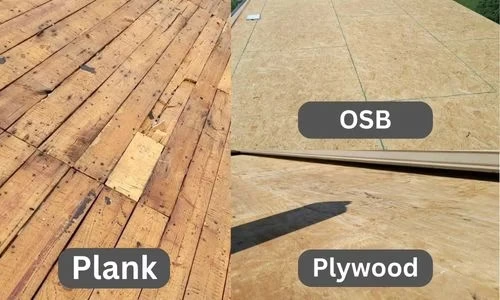
The three main roof decking types we commonly see on homes in Michigan are OSB, plywood, and plank boards. All three can provide a solid roof deck when they’re in good condition and installed correctly. However, when we’re replacing damaged decking or installing new sheathing, OSB is usually our preferred choice at Level Up Improvement.
Why? It’s strong, readily available, consistent, and usually more cost-effective than plywood. Let’s break down the differences.
What Is Roof Decking?
Roof decking, sometimes called roof sheathing, is the solid surface attached to your home’s rafters or trusses. Your roofing system gets installed over this surface.
In a typical asphalt shingle roofing system, the basic order is rafters or trusses, roof decking, ice and water protection and underlayment, then shingles.
The decking needs to provide a solid, properly fastened surface for the roofing system above it.
1. OSB Roof Decking
OSB, or oriented strand board, is an engineered wood panel made from wood strands arranged in layers and bonded together with adhesives.
It might not look as pretty as plywood, but appearance doesn’t matter much when the material is underneath your roof.
For most situations where we need new decking, OSB is our first choice.

Pros of OSB Roof Decking
One of the biggest advantages is cost. OSB is generally an economical way to create a strong, consistent roof deck.
It’s also readily available. That matters during a roof replacement when we tear off the old shingles and discover decking that needs to be replaced.
Another advantage is consistency. Because OSB is an engineered product, the panel doesn’t have the natural knots and voids you can find in traditional wood products.
Proper installation is still important. Both plywood and OSB can expand as their moisture content changes, so correct panel spacing and fastening matter.
Cons of OSB Roof Decking
The biggest concern people bring up with OSB is water.
OSB doesn’t like prolonged exposure to moisture. If water repeatedly reaches the decking and remains there, the panel can swell and deteriorate over time.
But here’s the important part: your roof decking isn’t supposed to be getting wet.
The entire roofing system above it exists to manage water and keep it out of the structure. Proper shingles, flashing, ice and water protection, underlayment, ventilation, and installation all work together to protect the decking.
CertainTeed explains how roofing underlayment provides another layer of protection beneath shingles.
The same basic principle applies to wall sheathing behind properly installed siding. We don’t choose exterior systems expecting water to regularly reach the structural wood behind them. We install the exterior correctly so it doesn’t.
For that reason, OSB’s moisture sensitivity isn’t something that would stop us from using it on a properly built roofing system.
2. Plywood Roof Decking
Plywood is another excellent roof decking material.
Instead of wood strands, manufacturers make plywood by bonding thin layers of wood veneer together with the grain running in alternating directions. It has been widely used for roof sheathing for decades.

Pros of Plywood
Plywood handles short-term moisture exposure well and has a long history in residential construction.
It’s strong, relatively lightweight, and provides a good nailing surface.
For homeowners worried specifically about moisture exposure during construction, plywood may offer some advantages. That doesn’t mean plywood should be allowed to stay wet, though. Any wood-based roof deck should be protected from prolonged moisture.
Cons of Plywood
The biggest disadvantage for many roofing projects is cost.
If OSB and plywood can both provide an appropriate structural roof deck, paying more for plywood doesn’t always provide enough benefit to justify the additional expense.
Plywood can also expand and buckle when installed improperly. This isn’t an OSB-only issue. Both materials respond to changes in moisture, which is why proper spacing and installation matter.
3. Plank Board Roof Decking
If you own an older home in Metro Detroit, there’s a good chance you may have plank decking underneath your roof.
Before sheet goods such as plywood and OSB became common, builders often constructed roof decks using individual wood boards installed across the rafters.
We’ve uncovered plenty of plank decking during roof replacements throughout Southeast Michigan.

Pros of Plank Decking
Good plank decking can be incredibly durable.
We’ve torn roofs off older homes and found boards underneath that are still solid many decades after the house was built.
Planks are also individual pieces of lumber. If a limited area has deteriorated, individual boards can sometimes be replaced rather than removing a large section of the deck.
Cons of Plank Decking
The biggest issue isn’t necessarily the wood itself. It’s the gaps and condition of the boards.
Over decades, boards can split, crack, loosen, warp, or develop spaces between them. That can leave areas without the solid nailing surface needed for a modern roofing system.
When we remove an old roof, we inspect the decking before installing the new roofing system.
If the existing plank deck isn’t suitable for the new roof, we may need to repair damaged sections or install new sheathing to create the proper surface.
Which Roof Decking Type Is Best?
There isn’t one answer for every house.
If you already have solid plywood or plank decking that meets the requirements for the roofing system we’re installing, there’s no reason to replace perfectly good material simply because we prefer something else.
But when new roof decking is needed, we generally choose OSB.
It gives homeowners a strong and consistent roof deck without unnecessarily increasing the cost of the project. It’s readily available, easy to work with, and performs well when installed correctly.
And while OSB’s biggest disadvantage is prolonged moisture exposure, a properly installed roofing system is designed specifically to keep that moisture away from the decking.
We’d rather put the money where it makes a meaningful difference to the homeowner.
We Check the Roof Deck During Every Tear-Off
One thing homeowners should understand is that a roofing contractor can’t always know the exact condition of the decking before removing the old roof, even when they perform an attic inspection.
Shingles and underlayment can hide damaged or deteriorated wood.
Once we tear everything off, we can actually inspect the surface underneath. If we find damaged decking, we’ll address it before covering the roof back up.
Putting expensive new shingles over bad wood doesn’t make sense.
You can learn more about our roofing services in Metro Detroit and how we approach a complete roofing system.
At Level Up Improvement, we’re a family-owned exterior remodeling company serving homeowners throughout Metro Detroit and Oakland County. If you’re considering a roof replacement, contact us and we’ll take a look at your roof and give you an honest recommendation.
Do it right!