


Attic Condensation: Why It Happens and How to Prevent It
Attic condensation can look like a roof leak, but the roof isn’t always the problem. In Brandon’s latest video, he explains how warm air escaping from the house and poor attic ventilation can create moisture problems above your ceiling.
This becomes especially important as temperatures start dropping here in Metro Detroit.
What Causes Attic Condensation?
Warm air from inside your home naturally rises. Gaps around light fixtures, attic hatches, plumbing penetrations, wall openings, and other areas can allow warm, moisture-filled air to escape into the attic.
Once that warm air reaches a cold surface, such as the underside of your roof decking, the moisture in the air can condense.
It’s similar to the condensation that forms on the outside of a cold drink.
Except you don’t want that happening to the wood inside your attic.
ENERGY STAR explains that warm, moist household air entering a cold attic can create condensation and even frost during cold weather.
Poor Ventilation Can Make Attic Condensation Worse
A properly designed attic needs airflow.
For a traditional vented attic, we want to see a balanced system with intake and exhaust ventilation.
Intake ventilation is commonly located at the soffits. It allows outside air to enter near the bottom of the roof. Exhaust ventilation near the top of the roof allows air to leave.
We often explain it this way:
You can’t breathe out if you can’t breathe in.
Adding more exhaust vents doesn’t necessarily solve a ventilation problem if there isn’t enough intake air available.
Blocked soffit vents are another common issue. Insulation can get pushed into the eaves and prevent air from entering through the soffits.
@level_up_improvement Livonia Attic Fail _ No Intake, Blocked Vents & Poor Insulation Causing Moisture
♬ original sound – Level Up Improvement – Level Up Improvement
Insulation and Air Sealing Matter Too
Ventilation isn’t the only thing we look at when diagnosing attic condensation.
We also want to determine why so much warm, moist air is reaching the attic in the first place.
Air sealing helps close gaps between the conditioned portion of your home and the attic. Proper insulation helps reduce heat transfer.
These systems need to work together.
A well-insulated attic with poor air sealing can still allow warm, moist air through gaps and penetrations. Likewise, simply adding roof vents may not correct a significant air-leakage problem.
What Happens If You Ignore Attic Moisture?
Occasional moisture can turn into a much bigger problem if the underlying cause isn’t corrected.
Over time, excessive attic moisture can contribute to:
- Mold or mildew
- Wet insulation
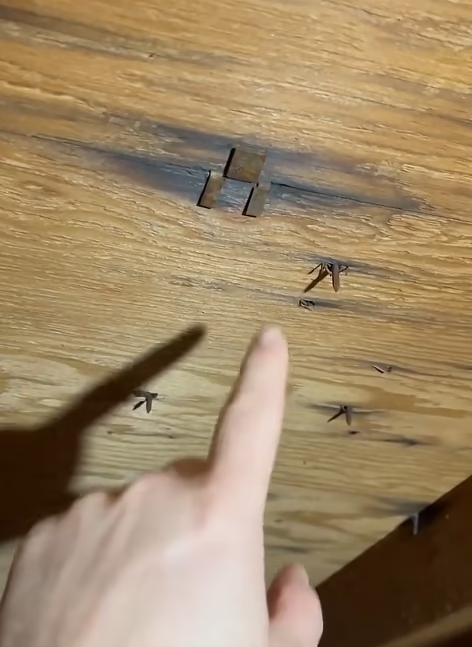
- Staining on the roof decking
- Wood deterioration or rot
- Rusted fasteners
- Ice dam problems
- Reduced insulation performance
Homeowners sometimes assume these signs automatically mean the roof is leaking.
That’s why it’s important to identify where the moisture is actually coming from before recommending a repair.
How We Diagnose Attic Condensation
When we inspect an attic moisture problem, we’re not just looking at the shingles.
We want to understand the entire roofing and attic system.
That means checking the roof deck, insulation, intake ventilation, exhaust ventilation, bathroom exhaust fans, penetrations, and obvious air leakage areas.
For example, a bathroom exhaust fan that terminates inside the attic can dump a tremendous amount of moisture into the space. That needs a different solution than a leaking roof.
Sometimes the roof needs work. Sometimes the ventilation needs to be corrected. Other times, insulation or air sealing may be the bigger issue.
The goal is to identify the actual cause before spending money on the wrong solution.
Worried About Attic Condensation?
If you’re noticing moisture, frost, staining, mold, or other unusual conditions in your attic, don’t automatically assume you need a new roof.
Have someone inspect the system and determine where the moisture is coming from.
At Level Up Improvement, we take a straightforward approach. Our team can inspect your roofing system and explain what we’re seeing.
You can also learn more about proper attic ventilation from ENERGY STAR.
If the roof is the problem, we’ll tell you.
If it isn’t, we’ll tell you that too.
Do it right!