


Roof or Siding Leak in Eastpointe? How to Tell Where Water Is Coming From
Roof or siding leak calls are some of the most common service calls we get at Level Up Improvement, and they are also some of the most misdiagnosed. A homeowner sees water staining on a wall or ceiling and immediately assumes the roof is to blame. Sometimes that is correct. But a significant number of water intrusion problems we investigate turn out to be coming from the siding, the windows, or the intersection where those systems meet the roof, not from the roof itself.
This post walks through a real job we just completed in Eastpointe, Michigan, explains what we found, and gives homeowners across the metro Detroit area a clear framework for understanding where a leak is actually coming from and what to do about it.
How This Eastpointe Call Started
We completed a roof installation for this homeowner last year. When they called us recently reporting water coming in, our first responsibility was to take it seriously and get eyes on it. A new roof leaking is rare but it does happen. Mistakes can be made and we stand behind our work, so we went out to investigate with no assumptions.
What we found when we got there was not a roofing problem.
What the Photos Show
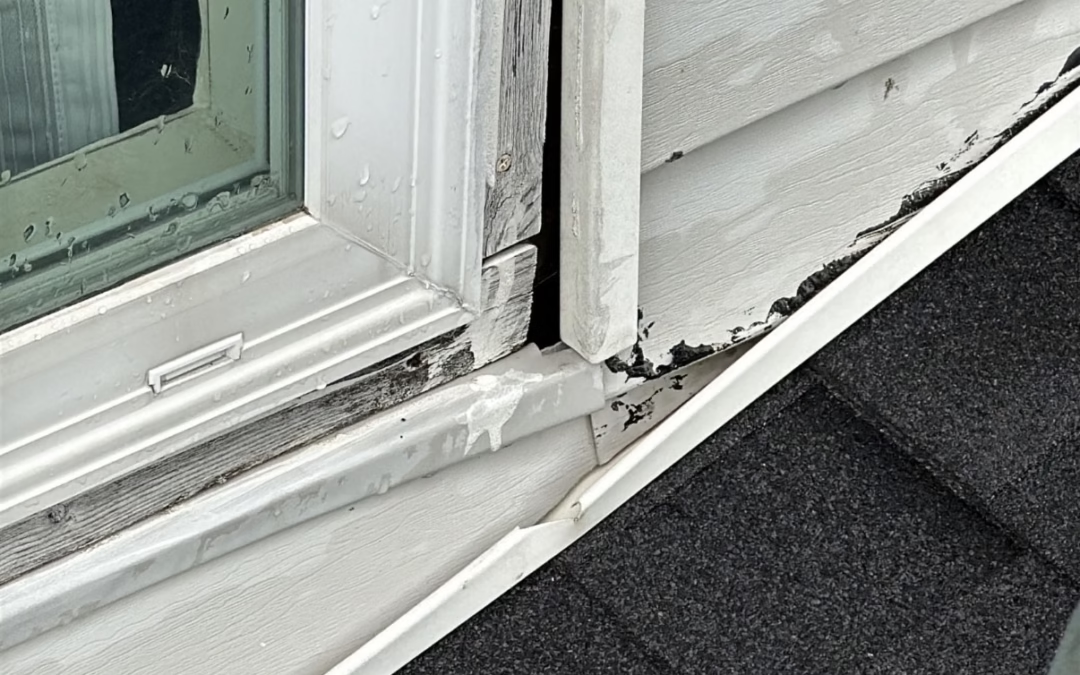
The first photo shows the exterior of the home at a point where a window meets the siding and a lower roof section. Look closely at where the window frame meets the J channel on the siding. There is a visible gap between those two components, and there is no weatherproof barrier or housewrap behind the siding in this area. That gap is exactly where water was entering the assembly.

When it rains, water runs down the window frame, finds that gap, and gets behind the siding. From there it has nowhere to go except down, and it runs directly behind the step flashing on the roof below. With no housewrap or weather resistant barrier behind the siding to redirect it, that water travels freely until it finds its way into the interior of the home.
The second photo shows the result on the inside: water staining and separation at the ceiling and wall junction, which is exactly where you would expect to see damage when water is tracking down from a wall assembly above a roofline.

This is a textbook siding and window detailing failure, not a roofing failure.
How to Tell If a Leak Is Coming From the Roof or Siding
This is the question we get most often, and the honest answer is that you cannot always tell without a thorough inspection. But here are the patterns that point in each direction.
Signs the leak is likely coming from the roof:
Water appears at or near a penetration like a chimney, skylight, pipe boot, or valley. The staining or dripping shows up during rain but only when rain is heavy or wind-driven from a specific direction. You have an older roof that is past its expected lifespan. There are missing, cracked, or visibly damaged shingles in the area above where water is appearing inside.
Signs the leak is likely coming from the siding or windows:
Water appears at a wall, not just at the ceiling. Staining tracks down a wall from a window corner or from where siding meets a trim board. The home has older siding with no visible housewrap or weather resistant barrier behind it. There are gaps visible at window frames, J channel seams, or where different siding sections meet. Water appears inside at an area directly above a lower roof section where the wall and roof intersect.
That last pattern is exactly what happened in Eastpointe. The interior damage appeared near where the wall above the porch or addition roof meets the main structure, which pointed immediately toward the wall assembly rather than the roof field.
Why the Intersection of Siding and Roofing Is the Most Vulnerable Spot
Any place where a vertical wall meets a roof surface is a high-risk area for water intrusion. This is true regardless of how good the roofing work is, because the roofing and the siding are two separate systems that have to work together correctly. Step flashing is installed to direct water off the roof at that intersection, but step flashing only works properly when the wall assembly above it is also performing correctly.
If water gets into the wall above the step flashing, it can bypass the flashing entirely and enter the structure from behind. That is exactly what was happening here. The roof step flashing was doing its job. The siding was not, because there was a gap at the window and no barrier behind the siding to stop water from migrating behind it.
This is also why it is so important to have a contractor who understands both roofing and siding as integrated systems rather than treating them as completely separate scopes of work. A roofer who only looks at the shingles and a siding company that never thinks about how their work affects drainage at roof intersections are both going to miss problems like this one.
What We Did
Because the siding replacement or a full repair is a larger scope of work that needs to be scheduled properly, we took care of the immediate problem first. We sealed the gap between the window and the J channel to stop water from entering that opening and buying the homeowner time until a more thorough repair can be completed. That temporary seal stops the active intrusion while the permanent solution gets planned.
The permanent fix for this home will involve proper integration of a weather resistant barrier behind the siding in the affected area, correct flashing at the window-to-siding transition, and ensuring that the J channel is properly seated and sealed so there is no pathway for water to get behind the wall assembly.
What You Should Do If You Suspect a Roof or Siding Leak
Do not wait. Water intrusion that looks minor on the inside is almost always more significant behind the wall or above the ceiling where you cannot see it. Saturated insulation, wet sheathing, and the early stages of mold growth can all be happening well before you see a stain on your drywall.
Call a contractor who will actually investigate rather than just assume. A good contractor does not show up and immediately start talking about what needs to be replaced. They look at the exterior, trace the likely entry points, check the interior damage pattern, and give you an honest assessment of what is actually happening before any work is discussed.
If you have had recent work done by any contractor and you are seeing water, call that contractor first. A company that stands behind their work will come out and look. If the problem turns out to be from their scope of work, they should own it. If it turns out to be something else, a good contractor will tell you that honestly and help you understand what the actual issue is. That is exactly what we did in Eastpointe.
Level Up Improvement Serves Eastpointe and All of Macomb County
We install roofing, siding, and windows across the metro Detroit area including Eastpointe, St. Clair Shores, Roseville, Clinton Township, Warren, and all of Macomb County, as well as Oakland and Wayne Counties. Our warehouse is based in Royal Oak at 4425 Fernlee Ave, which puts us close to the entire service area.
If you are seeing water in your home and you are not sure where it is coming from, reach out to us. We will come take a look and give you a straight answer.
Frequently Asked Questions: Roof and Siding Leaks
Q: How do I know if my leak is from the roof or the siding? A: Look at where the water appears inside. Leaks that show up at ceiling penetrations like chimneys, skylights, or vents are usually roofing related. Leaks that track down walls, appear near window corners, or show up where a wall meets a lower roof are more often coming from the siding or window detailing. A proper exterior inspection is the only way to know for certain.
Q: Can siding cause a roof leak? A: Siding itself does not cause the roof to leak, but water that gets into the wall assembly through siding failures can bypass roof flashing and enter the structure in a way that looks like a roof leak from the inside. This is one of the most commonly misdiagnosed water intrusion patterns we see.
Q: What is J channel and why does it matter? A: J channel is the trim piece used at the edges of vinyl siding runs, particularly around windows and doors. When J channel is not properly sealed or when a gap develops between the J channel and the window frame, it creates an entry point for water to get behind the siding. This is exactly what happened on the Eastpointe home in this post.
Q: Do I need housewrap or a weather resistant barrier behind my siding? A: Yes. A weather resistant barrier behind siding is a critical component of a properly performing wall assembly. It acts as a secondary line of defense against water that gets past the siding surface. Homes without it are significantly more vulnerable to moisture damage inside the wall cavity.
Q: What should I do while waiting for a siding or roof repair? A: If water is actively entering the home, a temporary seal at the visible entry point can stop the intrusion while a permanent repair is planned. Do not ignore an active leak even if it seems minor. The longer water is in the wall or ceiling assembly, the more damage it causes.
Q: Does Level Up Improvement handle both roofing and siding repairs? A: Yes. We install and repair roofing, siding, and windows across the metro Detroit area including Eastpointe, St. Clair Shores, Warren, Roseville, Clinton Township, and surrounding communities in Macomb, Oakland, and Wayne Counties.
Seeing a Roof or Siding Leak in Eastpointe? Call Us.
Whether it is the roof, the siding, or the intersection of both, Level Up Improvement will come out, look at it honestly, and tell you exactly what is happening. We are based in Royal Oak at 4425 Fernlee Ave and serve the entire metro Detroit area. Reach out today for a free assessment.