


Granule Loss on Roof Shingles: What’s Really Happening to Your Roof
Most homeowners know that missing shingles are bad news. But one of the most damaging things that can happen to a roof happens so gradually you might not notice it until real problems have already set in. Granule loss looks like a cosmetic issue at first. It is not. It is the beginning of a process that breaks down your shingles from the surface all the way through, and understanding what actually happens inside that shingle is the best way to know why it matters so much.
What Granules Actually Do
Before getting into what goes wrong, it helps to understand why granules are there in the first place.
Those small, sand-like particles embedded across the surface of your asphalt shingles are not decorative. Granules are the first line of defense for everything below them. They block UV radiation from reaching the asphalt layer underneath, which is critical because asphalt degrades quickly when exposed to direct sunlight. Granules also give the shingle its fire resistance rating, add weight and durability, and help water shed off the surface cleanly rather than soaking in.
When granules are doing their job, water hits the roof, rolls down the granule-covered surface, and exits through the gutters. That system works well. The problems start when the granules stop being there.
How Granule Loss Happens
Granule loss is not always the result of a single event. More often it builds up over time through a combination of causes.
Age is the most common factor. Shingles are manufactured with more granules than they technically need, and some shedding in the first few months after installation is normal as the excess loosens. After that initial period, a properly installed shingle should hold its granules for years. As shingles approach the end of their lifespan, however, the adhesive bond between the granules and the asphalt surface weakens. Granules start coming loose in higher volumes, accelerating the timeline toward failure.
Hail damage causes some of the most severe granule loss and some of the most deceptive. A hailstorm does not have to punch through a shingle to cause serious damage. Even hail that leaves no obvious dent or crack can knock granules loose across wide sections of the roof. What looks like a shingle that survived a storm may actually be a shingle that lost years of protective life in a single afternoon.
Heavy rain and foot traffic both contribute as well. Repeated impact from high-volume rain loosens granules over time, and walking on a roof without proper technique or footwear accelerates the process in the areas where weight was applied.
Poor manufacturing or improper installation can also cause premature granule loss. Shingles that were not cured correctly or were installed in conditions outside the manufacturer’s specifications may start shedding earlier than expected.
What Happens Inside the Shingle When Granules Are Gone
This is where the real damage story begins. Most people see granule loss as a surface issue, but it triggers a chain reaction that goes much deeper.
The asphalt layer gets exposed.
Directly beneath the granules is the asphalt coating. This is what makes the shingle waterproof. Asphalt is effective at repelling water, but it has one significant vulnerability: UV light breaks it down. Under a full granule cover, the asphalt is shielded. Once granules are missing, sunlight hits the asphalt directly and oxidation begins. The asphalt starts to dry out, stiffen, and crack. You will often see this as darkened, shiny, or blistered patches on the shingle surface where granules used to be.
An oxidized asphalt layer does not shed water the way it should. It starts to absorb it instead.
The fiberglass mat becomes visible.
Beneath the asphalt coating is a fiberglass mat, which is the structural core of a modern asphalt shingle. It gives the shingle its shape and tensile strength. In a healthy shingle, you will never see the fiberglass. It is fully encased in asphalt.
Once the asphalt layer breaks down enough, the fiberglass mat begins to show through. It looks like a lighter, almost silvery or whitish texture on the surface of the shingle. The more visible fiberglass you can see on a shingle, the further along the deterioration process is. At that stage, the shingle is not failing. It has already failed.
Exposed fiberglass is also extremely fragile compared to a fully intact shingle. It tears easily, it does not hold fasteners the way it should, and it gives water direct access to the decking below.
The shingle stops wicking water and starts holding it.
A healthy shingle is designed to move water down and off the roof quickly. The granule surface gives water a consistent, slightly rough texture to flow across, and the waterproof asphalt underneath makes sure nothing soaks in.
A shingle with significant granule loss does the opposite. The deteriorated asphalt surface becomes porous and uneven. Water slows down instead of sheeting off. It pools in the areas where the surface has dipped or cracked. It seeps into micro-fractures in the damaged asphalt. Over time, water is no longer running off your shingle. It is sitting on it, working its way through it, and eventually reaching the decking, the underlayment, and the structure beneath.
This is how granule loss leads to leaks. Not all at once, and not always in an obvious place, but steadily and with increasing damage at every layer it reaches.
Where to Look for Granule Loss
You do not always need to get on the roof to spot granule loss, though a professional inspection is the most reliable method.
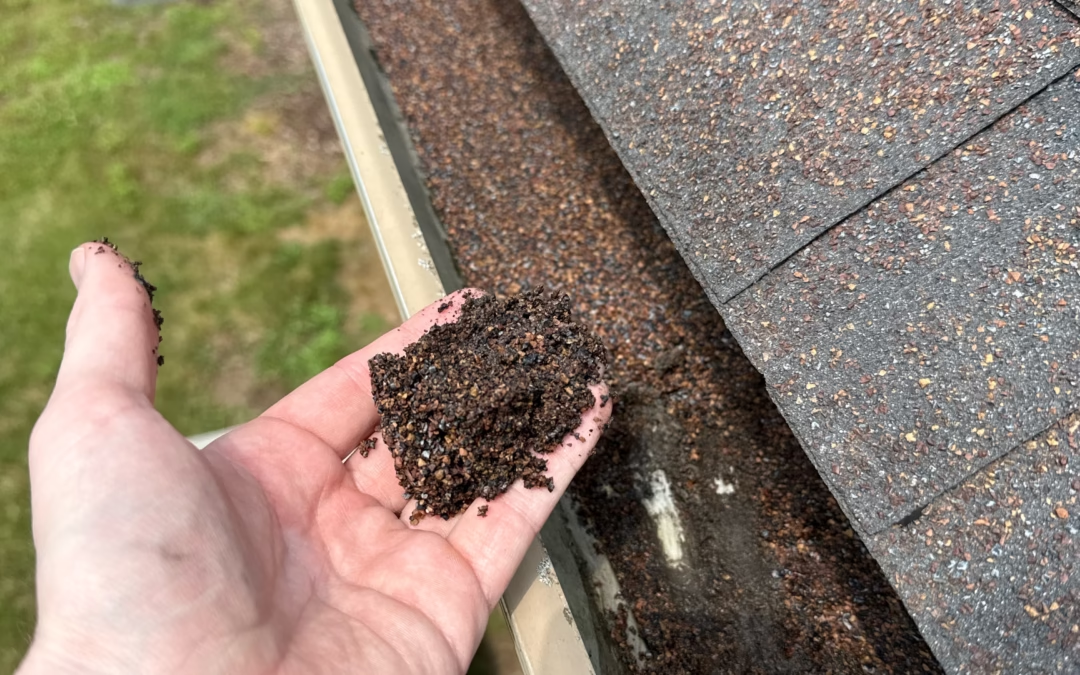
Gutters and downspouts are one of the first places granule loss shows up. If you see a significant amount of grit collecting in your gutters after rain, that grit is coming from your shingles. Some accumulation is normal over a roof’s life, but a heavy deposit after a storm or a consistent buildup throughout the season is a warning sign worth taking seriously.
The ground around downspout exits will sometimes collect granules as well, especially after heavy rain flushes them through.
The shingle surface itself will show bare, dark patches where granules are missing. In more advanced cases, you will see the lighter coloring of exposed fiberglass, often in irregular patterns across the roof.
After a hailstorm, a professional inspection is the most important step you can take. Hail damage is not always visible from the ground, and insurance claims for storm damage have time limits. Waiting too long means paying out of pocket for damage that should have been covered.
When Granule Loss Means Replacement
Not all granule loss is equal, and the right response depends on how far along the deterioration is.
Minor granule loss in isolated areas on a newer roof may be a warranty or installation issue. On an older roof, widespread granule loss across multiple sections is a strong indicator that the shingles are approaching the end of their useful life and that spot repairs will not address the underlying problem.
Once asphalt exposure and fiberglass visibility are widespread, repair is rarely the right answer. A shingle that is holding water rather than shedding it is no longer doing its job, and every rain event is adding to the cumulative damage being done to your decking and structure below.
The cost of replacing a roof before catastrophic water damage occurs is a fraction of what it costs to deal with rotted decking, damaged insulation, and the mold that follows prolonged moisture intrusion.
Final Thought
Granule loss is one of those roof problems that punishes waiting. The earlier it is caught, the more options you have. The longer it goes unaddressed, the more expensive and extensive the damage becomes. If your roof is more than ten years old, you have had recent hail, or you are noticing grit in your gutters, a professional roof inspection is the most important thing you can do before the next storm season hits.
check out this reddit post for another resource about granule loss and another post we made with a video here.